
Co-op fee up 10% in Sweden? Why housing associations raise fees
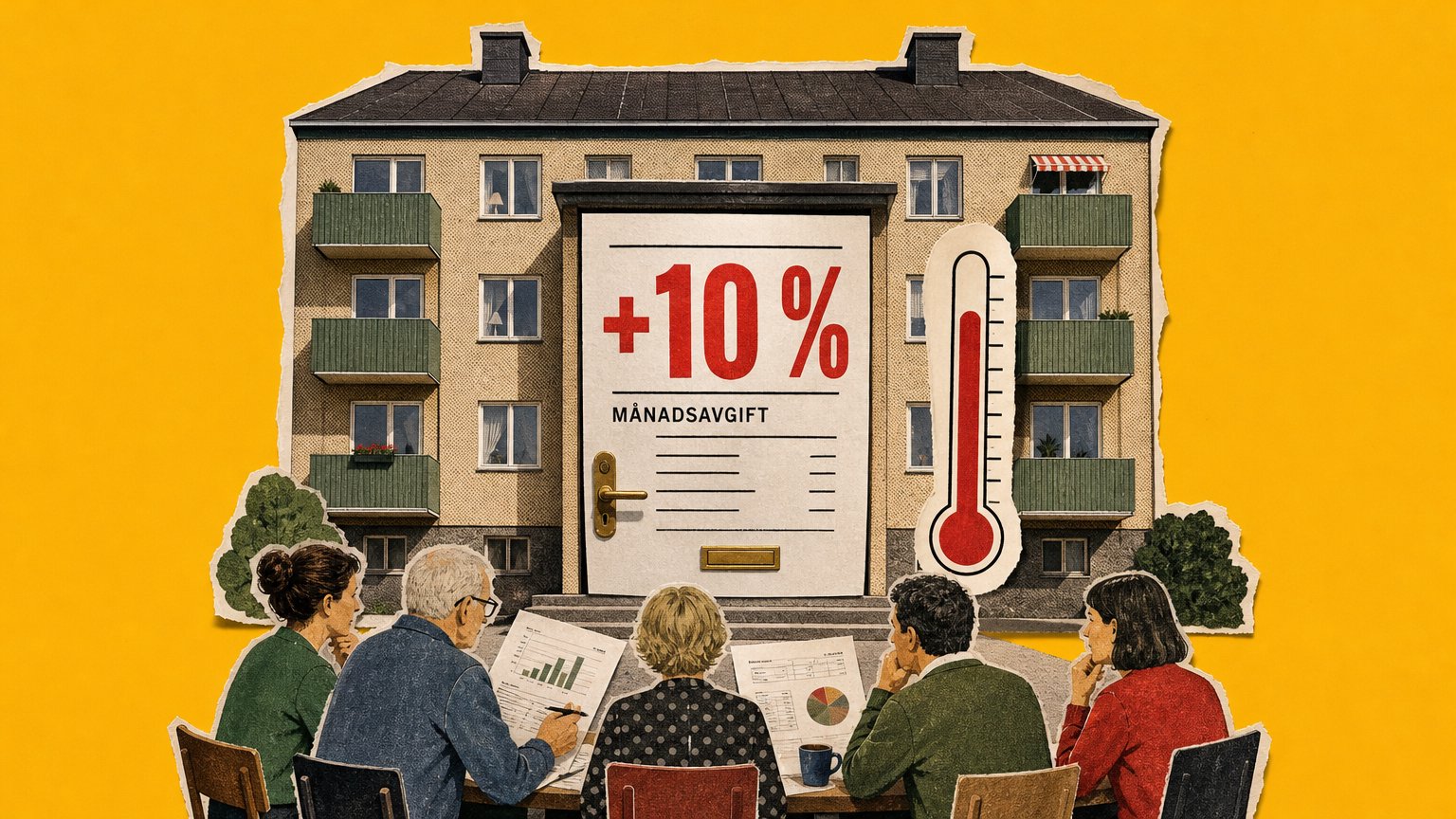
On a SEK 4,000 monthly fee that is SEK 4,800 more a year. Loan interest, dearer electricity and delayed maintenance are the main causes.
Say your housing association raises your SEK 4,000 monthly fee by 10% from January 2027. That is SEK 400 more a month, or SEK 4,800 a year.
Many associations set next year's budget in the autumn. That is why the news often arrives now. These are the most common reasons, and what you can do as a member.
Interest on the association's loans
Most associations have loans. When a loan is renewed, the association pays today's rate. In September 2026, the Riksbank said its policy rate should rise more than it had expected. That affects what the association's loans cost.
How exposed an association is shows in a key figure called interest sensitivity ("räntekänslighet"). It shows by how many percent the fees may need to rise if the interest rate goes up one percentage point. The association calculates it by dividing its interest-bearing debt by its income from annual fees.
Example: the association has SEK 50 million in loans and SEK 5 million in annual fees. Its interest sensitivity is then 10%. If the rate on the whole loan rises one point, the fees must rise 10% to cover it.
Energy and running costs
Many associations pay for heating and electricity for the building. According to Statistics Sweden (SCB), electricity prices rose 11.7% from August to September 2026. They were 17.0% higher than a year earlier. If the association pays for heating or household electricity, it shows in the budget.
Maintenance that was put off
Roofs, windows, lifts and pipes need replacing at regular intervals. If the association has saved too little, the jump is big when the work can no longer wait. A rise now can also be a way to build up savings in time.
Who decides the fee?
The bylaws ("stadgar") set out how the annual fee is calculated. In many associations, the board decides the actual amount. Check your bylaws to see what applies.
Changing the basis itself needs a change to the bylaws. It must be approved at two meetings in a row, and at the second one at least three quarters of those voting must say yes.
What you can do
- Read the annual report. The association must report key figures such as the annual fee per square metre, debt per square metre, savings per square metre, interest sensitivity and energy cost per square metre. Compare them with earlier years.
- Submit a motion. You have the right to have a matter dealt with at the general meeting. Ask the board in writing in good time for it to be included in the notice of the meeting. The bylaws may set a deadline.
- Ask questions at the annual general meeting. The meeting adopts the accounts and decides whether to discharge the board from liability. Ask how the association will cope with interest and maintenance in the coming years.
- Call an extra meeting. If at least one tenth of the members with a vote ask in writing, the board must call an extra general meeting on a stated issue.
- Get involved. The nomination committee often looks for people to join the board. That is where the budget is made.
Put the rise in your own budget
A rise of SEK 400 a month is a fixed cost. Add it to your budget now.
Thinking of buying a co-op flat? Look at the interest sensitivity and the savings per square metre. The property hunt chapter of our real estate crash course lists more things to check in an association. A low fee today can mean a high fee tomorrow.
Sources
- Riksbank: policy rate unchanged at 1.75 per cent, 24 September 2026
- Statistics Sweden: consumer price index, September 2026
- Annual Accounts Act (1995:1554), riksdagen.se
- Swedish Accounting Standards Board: guidance on housing association annual reports
- Housing Cooperatives Act (1991:614), riksdagen.se
- Economic Associations Act (2018:672), riksdagen.se
This content is general information, not financial or legal advice. Bolån Radar collects data from banks and authorities and cannot guarantee that it is complete or free of errors. Talk to your bank or an adviser before you decide.