
Jobless in Sweden? An amortization pause can free SEK 5,000 a month
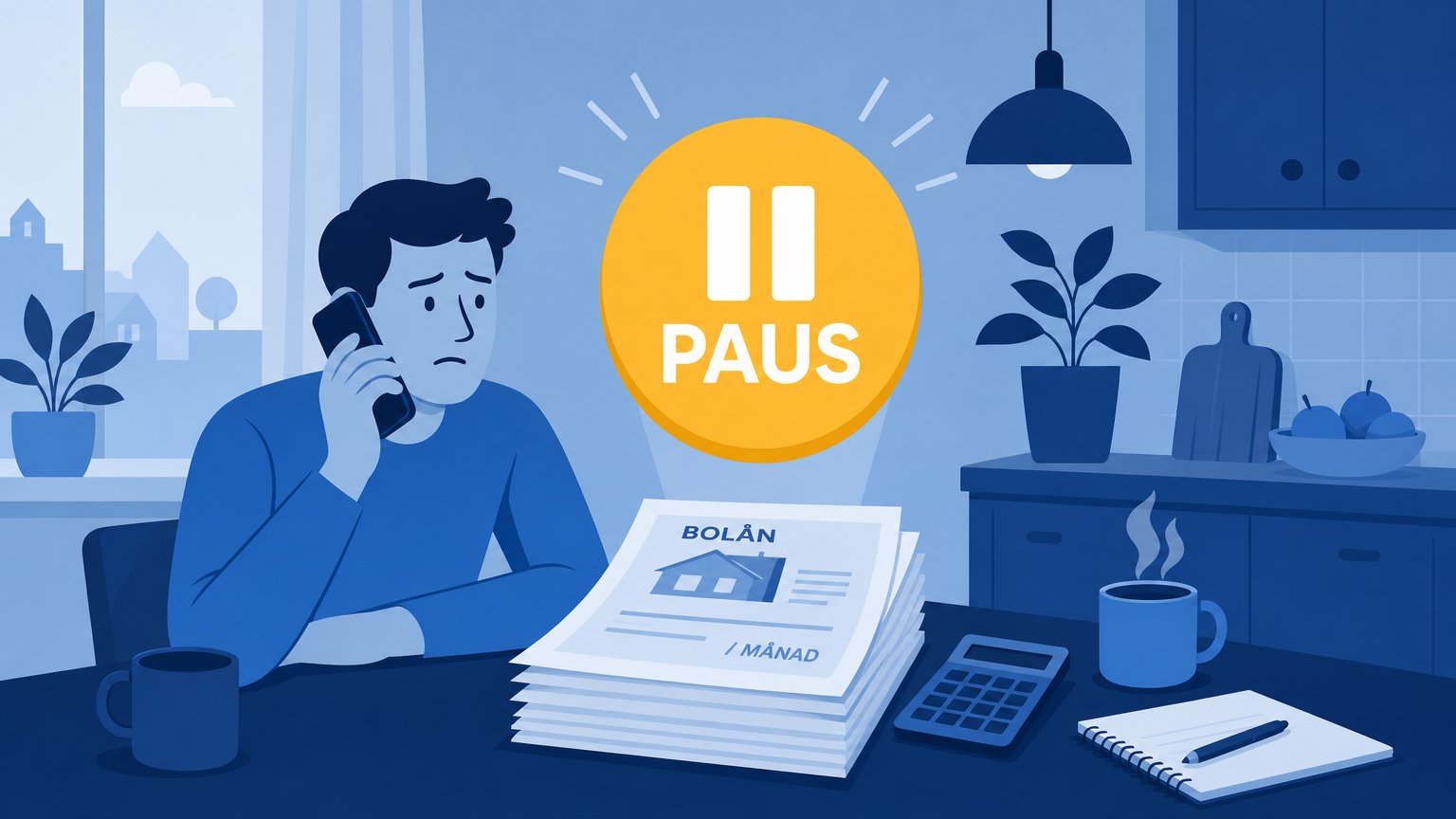
On a SEK 3,000,000 loan amortized at 2%, a pause frees SEK 5,000 a month. You still pay the interest, and you must ask before you miss a payment.
You have lost your job and the unemployment benefit does not cover everything. Your mortgage is SEK 3,000,000 and you amortize 2% a year. That is SEK 5,000 a month. A temporary pause in amortization can give you breathing space. But you need to ask your bank before you miss a payment, not after.
The bank may pause your amortization
The Act on Limiting Mortgage Credit ("lagen om begränsning av bostadskrediter") sets the amortization requirements ("amorteringskrav"). It also lets the bank allow you to stop amortizing for a time if there are special reasons ("särskilda skäl"). The pause applies for a limited period.
In the bill behind the act, the government gives typical examples:
- unemployment
- long sick leave
- parental leave
- a death in the close family.
The list is not complete. Other reasons can also count. The bank looks at each case based on your whole financial situation. The reason must have arisen after you took out the loan.
The pause is temporary, even if what happened is permanent. The bank must review it regularly. Even so, it can sometimes last for several years. The living with a mortgage chapter of our mortgage crash course covers other ways to adapt the loan when life changes.
What the pause gives you, and what it does not
On a SEK 3,000,000 loan with 2% amortization, you save SEK 5,000 a month. You still have to pay the interest. At a rate of 2.75%, that is about SEK 6,900 a month before tax relief.
If you and the bank agree on a six-month pause, you have SEK 30,000 more to work with during that time. The loan does not shrink while you pause. When the pause ends, amortization starts again.
Call the bank early
The sooner the bank knows, the more options there are. If you have already missed payments, a good solution is harder to find. Prepare the call like this:
- Make a budget. List your income and fixed costs. Show what you can pay each month.
- Explain what has happened. Have papers ready, such as a notice of dismissal or a doctor's certificate.
- Say how long you think it will last. If you have a new job lined up, say so.
- Ask what the bank can offer. Ask about a pause in amortization and what happens when it ends.
- Ask about your rate. Compare your rate with the bank's average rate. If yours is higher, ask for a lower one.
Get free help
Every municipality must offer budget and debt advice ("budget- och skuldrådgivning"). It is free and confidential. An adviser can help you make a budget, rank your debts and negotiate with the people you owe money.
The Swedish Consumer Agency ("Konsumentverket") advises paying the most important bills first if money runs short: rent or housing costs, electricity and food. Do not take out an expensive loan to pay the mortgage. That usually makes things worse.
If you miss a payment
A missed payment first brings reminders and fees. If you still do not pay, the debt can go to a debt collector or to the Swedish Enforcement Authority ("Kronofogden").
If you do not respond to a claim from Kronofogden, you can get a payment default on your record ("betalningsanmärkning"). It makes it harder to borrow, rent a home or sign some contracts for several years. In the worst case, the home may have to be sold.
A call to your bank before you miss a payment costs nothing.
Sources
- Act (2026:226) on limiting mortgage credit, riksdagen.se
- Government bill 2025/26:119, riksdagen.se
- Konsumentverket: municipal budget and debt advice
- Konsumentverket: worried about money
- Konsumentverket: debt collection and payment defaults
This content is general information, not financial or legal advice. Bolån Radar collects data from banks and authorities and cannot guarantee that it is complete or free of errors. Talk to your bank or an adviser before you decide.