
Sweden's Riksbank waits out the war: rate stays at 1.75% in May 2026
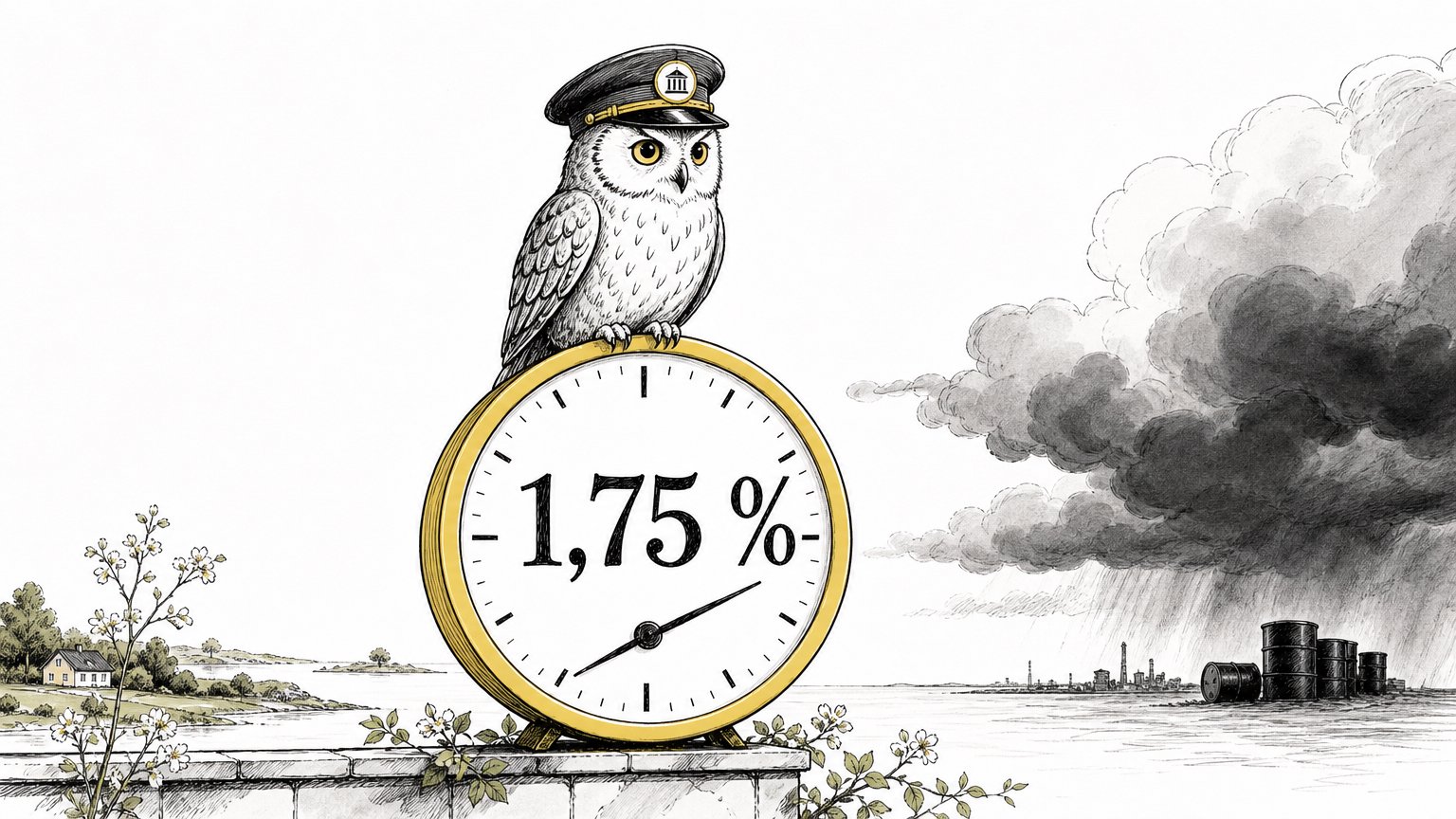
CPIF inflation fell to 0.8% in April 2026 and growth is weak. The Riksbank may still raise rates if the Middle East war sets off broad inflation.
Sweden's Riksbank kept its policy rate ("styrränta") at 1.75% on 7 May 2026. Inflation is below target and the economy is weak. That gives the central bank room to wait for a clearer picture of how the war in the Middle East affects the economy.
Low inflation, but the upside risk has grown
Recent inflation figures have been clearly lower than the Riksbank's March 2026 forecast, both with and without energy prices. Yesterday Statistics Sweden's flash estimate showed CPIF inflation falling to 0.8% in April 2026. There are also signs that growth was unexpectedly weak at the start of the year.
At the same time, the Riksbank judges that the risk of higher inflation from the war has grown slightly. The oil price remains high and has swung a lot. So far, dearer fuel is the most visible effect. Some businesses say in surveys that their costs are rising.
The door stays open
The Riksbank calls today's rate a good starting point for changing course if needed. If the war leads to a broad and lasting rise in inflation, the rate may have to go up. It also notes that the economy has been weaker than expected and that domestic price pressure is low. Today brought no new forecasts, only an update.
What it means for your mortgage
The policy rate gives banks no reason to change variable rates. Several banks raised their variable list rates ("listräntor") anyway at the end of March 2026, as short market rates rose.
Bolån Radar's data shows six large banks' average three-month rates between 2.63% and 2.72% in March 2026. A SEK 3,000,000 loan at 2.68% costs SEK 80,400 a year, or SEK 6,700 a month. After the 30% interest deduction ("ränteavdrag") it is SEK 4,690 a month.
Fixed rates have risen more. The average two-year rate at the same banks was between 2.88% and 3.13% in March 2026, against 2.81% to 2.95% in February 2026. With a fixed loan, you are affected only when the fixed period ends.
Our historic rates page shows how the average rates have moved month by month.
Next decision
The next rate decision is on 17 June 2026, together with a new Monetary Policy Report with fresh forecasts.
Sources
- Riksbank: Monetary policy decision, May 2026 (Swedish)
- Riksbank: Press release 7 May 2026 (Swedish)
- TT via TV4: Big banks raise variable mortgage rates, 30 March 2026 (Swedish)
- Statistics Sweden: CPI flash estimate, April 2026 (Swedish)
- Bolån Radar: historic average rates
This content is general information, not financial or legal advice. Bolån Radar collects data from banks and authorities and cannot guarantee that it is complete or free of errors. Talk to your bank or an adviser before you decide.