
Swedish down payment loans: no tax relief from 2026, SEK 12,000 a year
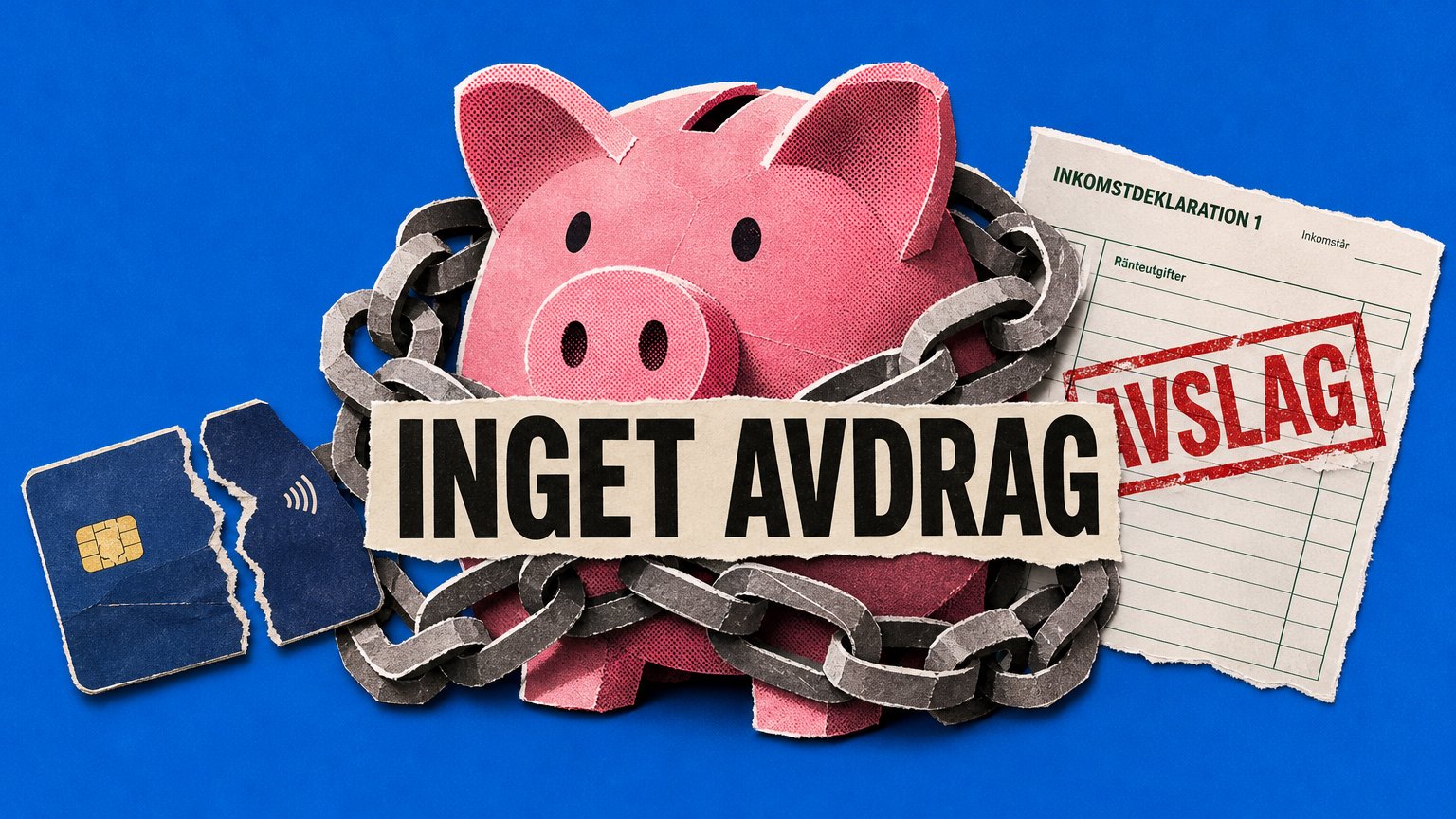
A SEK 150,000 personal loan at 8% costs SEK 12,000 a year, with no tax relief from 1 January 2026. Banks also count it when they test your mortgage.
From 2026, if you borrow your down payment ("kontantinsats") with a personal loan, you get no tax relief on that loan. A SEK 150,000 loan at 8% costs SEK 12,000 a year in interest, and the state pays none of it. The loan can also make the bank turn down the mortgage itself.
What changed at New Year
Sweden's Tax Agency ("Skatteverket") separates loans with security from loans without. A mortgage has the home as security. A personal loan, or unsecured loan ("blancolån"), has none.
- For the 2025 tax year, you can deduct half the interest on unsecured loans.
- From 1 January 2026, you can deduct nothing at all for interest on unsecured loans.
The same applies to credit cards, bridging loans when you buy a home, and loans from private people. If you borrow from a relative against a promissory note, that interest is not deductible either.
Interest on the mortgage itself still gives the full interest deduction ("ränteavdrag"): 30% on up to SEK 100,000 of interest a year.
What it costs
Say you buy a co-op flat for SEK 3,000,000. Before April 2026 the mortgage may be at most 85% of the price, so SEK 2,550,000. The down payment is SEK 450,000. You have saved SEK 300,000 and want to borrow the remaining SEK 150,000 with a personal loan at 8%.
- Interest in the first year is about SEK 12,000, or SEK 1,000 a month.
- Repaid over ten years, the monthly payment is about SEK 1,820.
- Over the whole period you pay about SEK 68,000 in interest.
- From 2026 you get none of that money back in tax.
The Tax Agency gives a similar example. A man buys a home for SEK 3,000,000 with a mortgage of SEK 2,550,000 and a personal loan of SEK 450,000.
For 2024 he could deduct all the interest. For 2025 he can deduct all the mortgage interest but only half of the personal loan interest. From 2026 he can deduct only the mortgage interest.
Why banks are wary
The loan-to-value cap ("bolånetak") exists so that you hold a stake of your own in the home. If you borrow the down payment, you have no stake. If prices fall, you owe more than the home is worth.
The bank also tests your whole budget in a "money left to live on" calculation ("kvar att leva på-kalkyl"). It counts interest and repayments on all your loans, not just the mortgage.
The personal loan's SEK 1,820 a month cuts what is left after housing and living costs. That can be enough to lower your pre-approval, or stop it.
Banks may also set their own cap on your total debt relative to income. The personal loan counts there too.
If you take the personal loan after the mortgage is approved, the bank has worked with the wrong figures.
Be open about the loan when you apply. The bank needs to know about it to assess your credit properly. The applying chapter of the mortgage crash course covers what else the bank looks at.
A proposal that could change the picture
On 18 December 2025 the government proposed raising the loan-to-value cap to 90% from 1 April 2026. The down payment on a SEK 3,000,000 home would then be SEK 300,000 instead of SEK 450,000. The proposal is not law. Parliament has not voted yet.
Other routes
- Save for longer. Every SEK 1,000 you save is SEK 1,000 less to borrow without tax relief.
- Buy for less. 15% of SEK 2,600,000 is SEK 390,000. That is SEK 60,000 less than for a SEK 3,000,000 home.
- A gift from family. A gift does not need to be paid back and carries no interest. Write a deed of gift, so the bank can see where the money comes from.
- Wait for a decision on 90%. If parliament says yes, you can buy with less of your own money from April 2026.
Do the sums before you borrow
Add up the monthly cost of the mortgage and the personal loan. Count mortgage interest after the deduction and personal loan interest with no deduction. Then add amortization, the fee and running costs. If you can still pay when the mortgage rate rises by 2 points, the loan is manageable. If not, it is wiser to save a while longer.
Sources
- Skatteverket: Deduction for interest costs (Swedish)
- Finansinspektionen: The Swedish mortgage market, April 2025 (Swedish)
- Riksbank: Credit assessment for mortgages, staff memo June 2024 (Swedish)
- Government Offices: Proposal for a higher loan-to-value cap and removal of the stricter amortization rule, 18 December 2025 (Swedish)
This content is general information, not financial or legal advice. Bolån Radar collects data from banks and authorities and cannot guarantee that it is complete or free of errors. Talk to your bank or an adviser before you decide.