
Buy a Swedish home in April 2026? Down payment may fall SEK 150,000
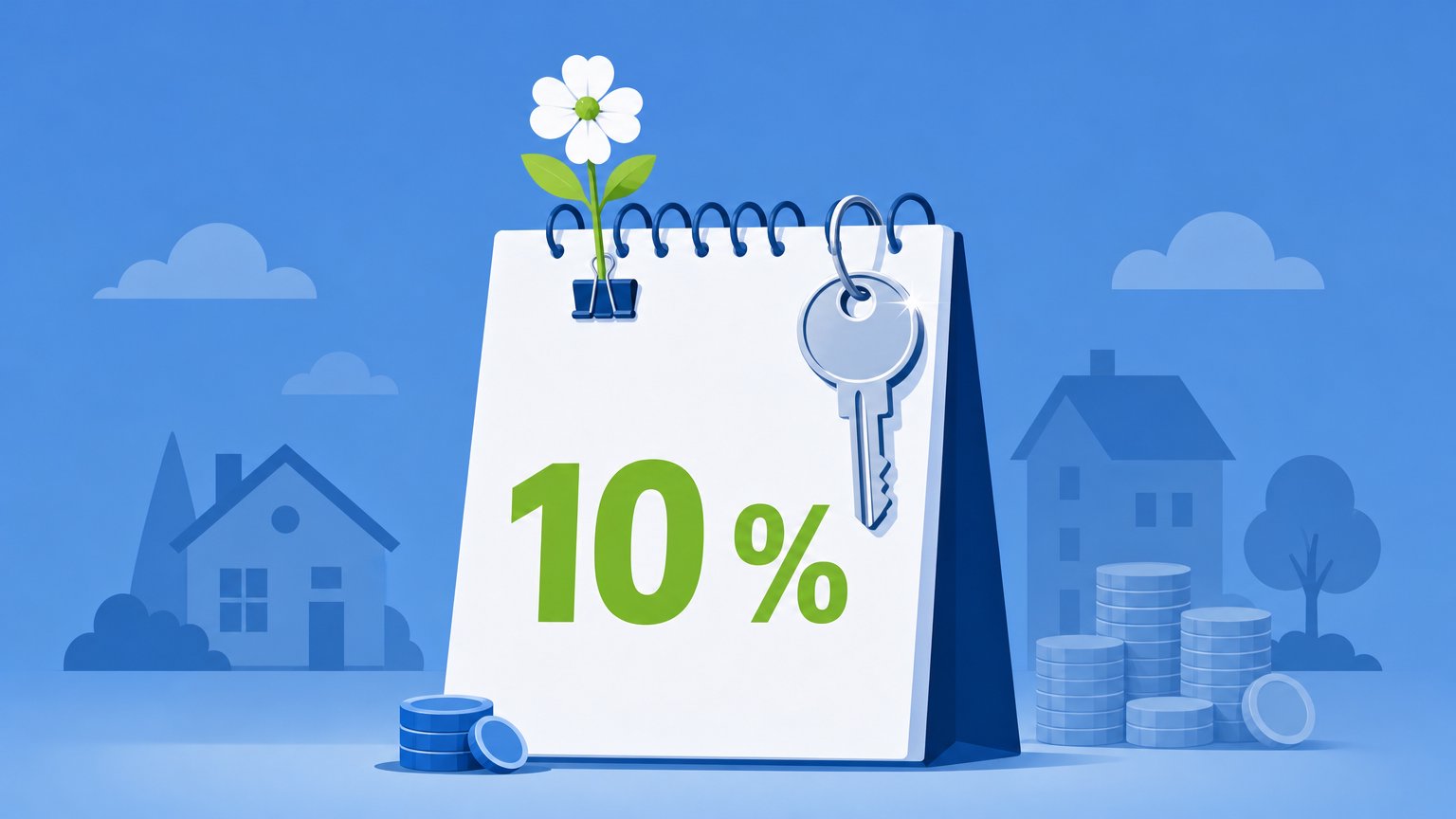
With a 90% cap, SEK 300,000 is enough for a SEK 3 million home, but the monthly cost rises about SEK 480. Parliament has yet to vote on the proposal.
If parliament approves the government's proposal, a 10% down payment ("kontantinsats") will be enough in Sweden from 1 April 2026. On a SEK 3,000,000 home, the requirement falls from SEK 450,000 to SEK 300,000. But the loan grows, the bank still tests your finances, and the proposal is not yet law.
What the government proposes
On 5 February 2026 the government sent a bill to parliament. It proposes that:
- a mortgage may be at most 90% of the market value when you buy a home, instead of 85% today,
- the stricter amortization rule ("skärpt amorteringskrav") goes, meaning the extra 1% when mortgages exceed 4.5 times gross income,
- loans taken to increase an existing mortgage may be at most 80% of the home's value,
- the rule that you can only revalue the home once every five years also applies when you want to borrow more.
The rules would move into a new law that replaces the Financial Supervisory Authority's regulations. They are proposed to apply from 1 April 2026. Parliament will decide in spring 2026.
What it means for a SEK 3,000,000 home
We use a variable rate of 2.65% and an interest deduction ("ränteavdrag") of 30%.
| Current rules, 85% | Proposal, 90% | |
|---|---|---|
| Down payment | SEK 450,000 | SEK 300,000 |
| Mortgage | SEK 2,550,000 | SEK 2,700,000 |
| Interest per month after deduction | 3,942 kr | 4,174 kr |
| Amortization 2% per month | 4,250 kr | 4,500 kr |
| Total per month | 8,192 kr | 8,674 kr |
So you need SEK 150,000 less in savings. In return you pay about SEK 480 more a month, of which SEK 250 is amortization.
The bigger gain for some: amortization
For households with lower incomes, losing the stricter rule may matter more than the smaller down payment.
Say the household earns SEK 500,000 a year. Today, 4.5 times income is SEK 2,250,000. A loan of SEK 2,550,000 is above that, so amortization is 3%: SEK 6,375 a month.
Under the proposal it is 2% of SEK 2,700,000: SEK 4,500 a month. Despite the larger loan, amortization falls by SEK 1,875 a month.
The bank still has the last word
The loan-to-value cap ("bolånetak") is a ceiling. It gives no right to borrow 90%. The bank runs a "money left to live on" calculation ("kvar att leva på-kalkyl") at a stress rate above today's rate. The Riksbank's worked example uses a stress rate of 7%.
At 7%, the extra SEK 150,000 of loan costs SEK 10,500 a year in the bank's sum, before tax relief.
If you are already close to the limit, the bank may say no to 90%. To set your own budget before you buy, see the financials chapter of the real estate crash course.
Should you wait?
There are reasons both ways.
Reasons to wait:
- You do not have 15% saved, but you do have 10%.
- Under today's rules you would pay the stricter amortization.
Reasons not to wait:
- You already have a 15% down payment. A higher cap changes little for you.
- You have found the right home now. Nobody knows how prices and bidding will move when more people can borrow more.
- The proposal is not law. Parliament can reject or change it.
Buying now with handover in April 2026
The handover date usually decides when the loan is paid out. If you sign in March 2026 and take over after 1 April 2026, ask the bank which rules it plans to apply. Also ask whether a pre-approval ("lånelöfte") you get in March is based on 85% or 90%.
Already have a mortgage?
If you plan to borrow more for a renovation, the limit becomes 80% of the home's value under the proposal, instead of 85% today. A SEK 4,000,000 house then allows mortgages of at most SEK 3,200,000.
If you pay the stricter amortization today, the government's press release does not say how existing loans will be handled. Ask your bank what applies to your loan if the law passes.
Sources
- Government Offices: The government moves ahead with new mortgage rules, 5 February 2026 (Swedish)
- Government Offices: Bill 2025/26:119 on macroprudential policy (Swedish)
- Finansinspektionen: FFFS 2016:16 on amortization of loans secured on a home (Swedish)
- Riksbank: Credit assessment for mortgages, staff memo June 2024 (Swedish)
- Bolån Radar: banks' average rates
This content is general information, not financial or legal advice. Bolån Radar collects data from banks and authorities and cannot guarantee that it is complete or free of errors. Talk to your bank or an adviser before you decide.