
Swedish mortgage: pay off SEK 30,000 less a year, but ask your bank
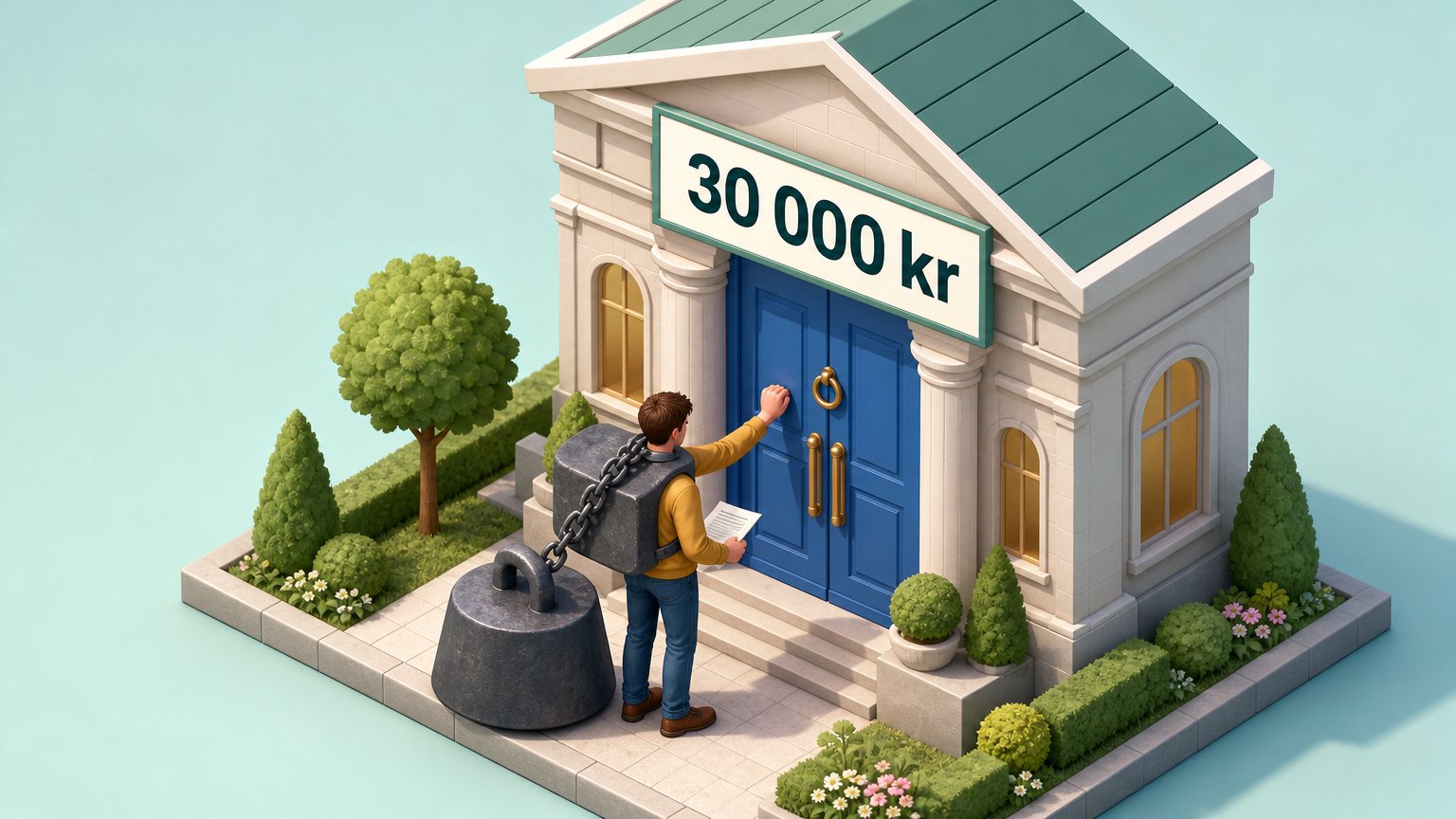
The stricter amortization rule ended on 1 April 2026, but existing loans change only if your bank agrees. On SEK 3 million: SEK 2,500 less a month.
Sweden's stricter amortization rule ("skärpt amorteringskrav") ended on 1 April 2026. That can cut amortization on a SEK 3,000,000 loan by SEK 30,000 a year. But on an existing mortgage, the rule does not stop on its own.
You have to agree new terms with your bank. If you do nothing, you keep paying the same amortization as before.
What changed on 1 April 2026
The Riksdag approved the government's bill on 4 March 2026. The rules on amortization and the loan-to-value cap ("bolånetak") moved from the Financial Supervisory Authority's regulations into a new law on limits for home loans. Three things changed for households:
- The stricter amortization rule went. It required an extra 1% a year when your home loans were larger than 4.5 times your household's gross yearly income.
- The loan-to-value cap rose from 85% to 90% when you buy a home.
- Loans that increase an existing mortgage may now reach at most 80% of the home's value.
The basic amortization rule stays. If you borrow more than 70% of the home's value, you must pay off at least 2% of the loan a year. Between 50% and 70%, the minimum is 1%. Below 50%, the law sets no requirement.
Why you must contact your bank yourself
The government says the rule does not disappear automatically for loans already covered by the stricter rule. The borrower has to agree with the bank to change the terms. The bill says it applies "provided the lender agrees" ("under förutsättning att kreditgivaren medger det").
So your bank decides. The law does not force the bank to lower your amortization, but it allows it.
How much you can save each month
Take a household that bought a house for SEK 4,000,000 with a SEK 3,000,000 loan. The loan-to-value ratio is 75%. The household earns SEK 600,000 a year before tax, so the loan is 5 times its income.
| Before 1 April 2026 | After a new agreement | |
|---|---|---|
| Rule based on loan-to-value | 2% | 2% |
| Stricter rule based on income | 1% | 0% |
| Amortization per year | SEK 90,000 | SEK 60,000 |
| Amortization per month | SEK 7,500 | SEK 5,000 |
The household pays SEK 30,000 less a year, or SEK 2,500 less a month. Amortization is based on the original loan amount, so it does not fall just because the debt has shrunk a little.
With a lower loan-to-value ratio, the drop is the same one percentage point. Between 50% and 70%, you go from 2% to 1%. Below 50%, you go from 1% to no legal requirement at all.
Paying off less has a cost
Money you no longer have to pay off stays in the debt. You pay interest on it for longer. With SEK 30,000 less amortization a year and a 3% rate, your interest cost is about SEK 900 higher in the first year, before tax relief. The gap grows each year you pay off less.
You can always pay off more than the rule requires. One option is to lower the required amount and save the difference instead. You keep the money if something happens, and you can still pay down the loan when you choose.
The managing your loan chapter of the mortgage crash course covers extra payments and other changes to a running loan.
What to do
- Find your latest amortization statement ("amorteringsunderlag") or loan notice. It shows whether the bank applies the stricter rule.
- Contact your bank through the app, online banking or your adviser. Ask for a change to your amortization terms.
- Ask which loan-to-value ratio the bank uses. It is based on the home's value when you bought it, or on a new valuation. As a rule, a new valuation is allowed five years after the purchase at the earliest.
- Ask for the new terms in writing, with the new monthly amount.
Who is not affected
If your home loans are below 4.5 times your income, the stricter rule never applied to you. Nothing changes. The same goes for loans taken out before the amortization rules began. Those loans are outside the law's amortization rules.
Sources
- New law changes to help more people own their home, Government of Sweden (in Swedish)
- Government bill 2025/26:119 on macroprudential policy, Riksdag (in Swedish)
- Finance Committee report 2025/26:FiU36, Riksdag (in Swedish)
This content is general information, not financial or legal advice. Bolån Radar collects data from banks and authorities and cannot guarantee that it is complete or free of errors. Talk to your bank or an adviser before you decide.